
Our current decisions significantly influence the future, particularly considering factors like climate change, population growth, and urbanization. To address these challenges, we prioritize reducing our environmental impact, efficient resource utilization, and ethical business practices. As active participants in the UN Global Compact and advocates for the UN 2030 Agenda for Sustainable Development, we incorporate global trends, ethical business standards, and stakeholder input into our sustainability strategy during planning. This commitment drives us to create a more sustainable future, aligning with international norms and addressing global issues.
For over 9 years, sustainability has remained a cornerstone of our core values, guiding our commitment to responsible practices across all stakeholders. We have seamlessly woven sustainability into every facet of our business, harnessing its potential to drive innovation and foster meaningful employee involvement. This comprehensive approach not only enables us to proactively identify and address operational and performance-related challenges but also empowers us to capitalize on emerging opportunities.

At the core of our sustainability strategy, we remain unwavering in our dedication to the critical components that propel our business and honor our obligations to stakeholders. In 2020, we conducted an exhaustive three-phase materiality assessment, meticulously identifying our key material focus areas:



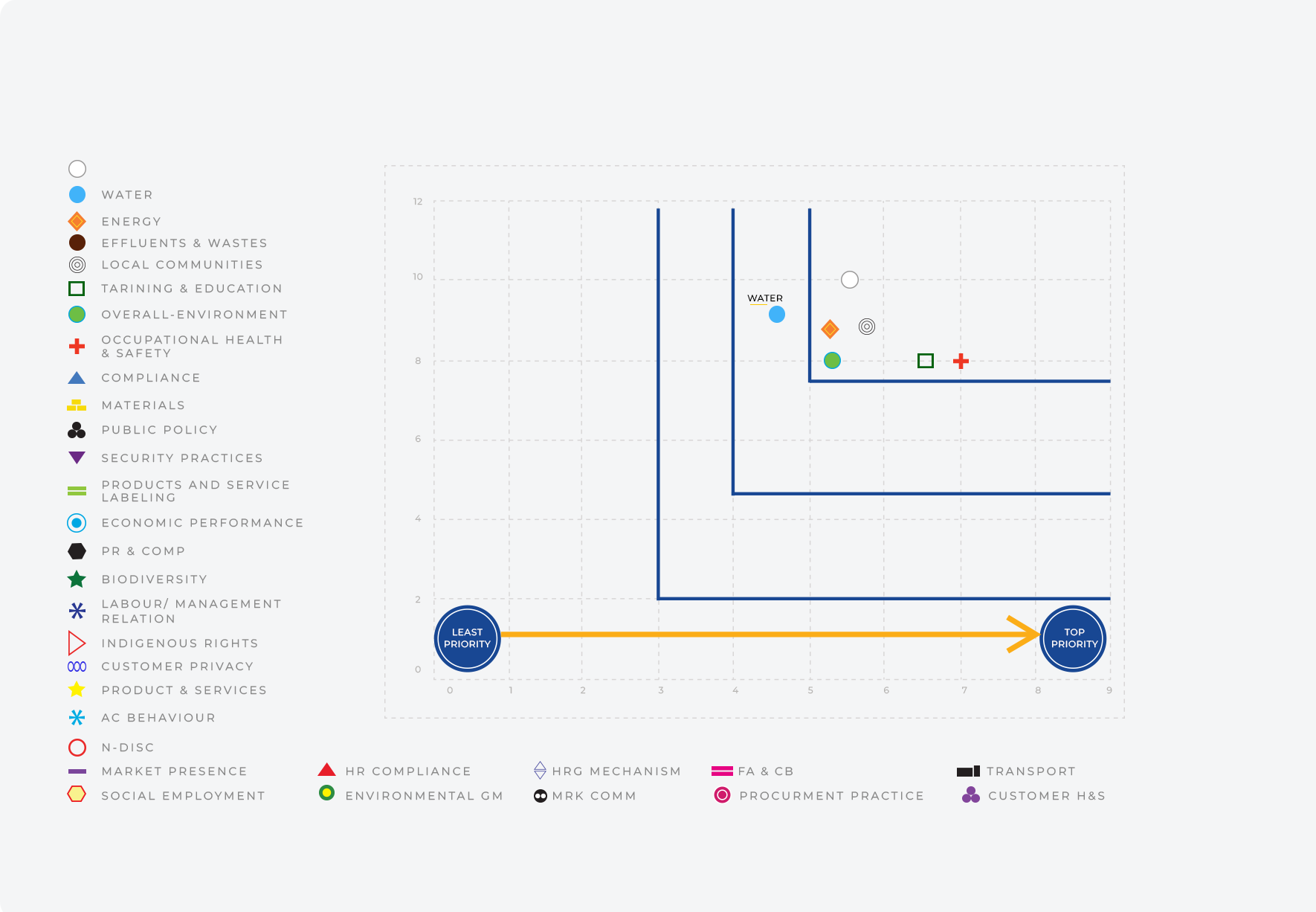
The Materiality Matrix serves as a visual representation of our key focus areas, encapsulating what truly matters to our organization. Each important area on this matrix is accompanied by distinct ambitions and enduring objectives. This report provides a detailed overview of the initiatives and metrics that align with these facets.
In a dynamic landscape where sustainability challenges and opportunities are constantly evolving, our commitment to vigilance remains unwavering. We continuously monitor external trends, emerging issues, and evolving perspectives. Our measuring stick is their relevance and impact, assessed against the backdrop of risks and opportunities for Farabi.
While the period of 2020-2021 did not introduce new material factors, we did reevaluate the significance of certain existing factors. This reevaluation was a response to insights gained from the Responsible Business analysis during its thorough assessment.
Assessing materiality for a sustainability report involves a thorough evaluation of economic, environmental, and social impacts that reach a critical threshold, affecting both present needs and the well-being of future generations. These factors carry substantial financial implications, making them crucial for stakeholders primarily concerned with the organization's financial health. The determination of material aspects results from a synthesis of intrinsic and extrinsic factors, including the organization's mission, competitive strategy, stakeholder input, societal expectations, and its influence on supply chain partners and customers, all while aligning with international standards and agreements.
In essence, the materiality assessment for a sustainability report integrates economic, environmental, and social impacts with financial significance, taking into account the organization's mission, strategy, stakeholder input, societal expectations, and adherence to international standards. This comprehensive approach ensures that the report effectively communicates the organization's essential sustainability priorities to stakeholders and the wider community.
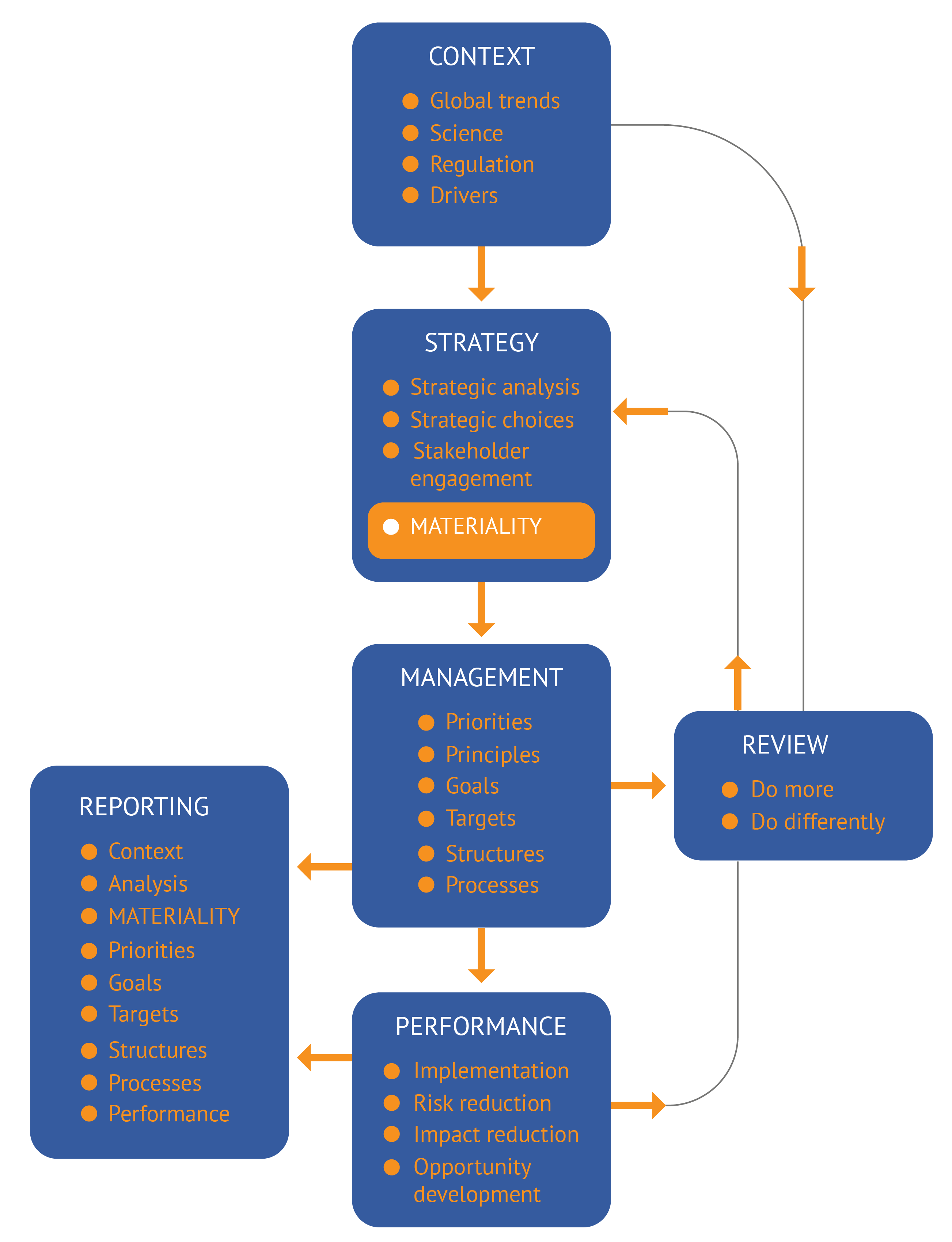
Looking ahead, our meticulously crafted sustainability framework serves as a guiding light, intricately weaving together our present business landscape with a resolute commitment to tackle global challenges head-on. Through its strategic delineation, we pinpoint the focal areas where our potential for enduring positive impact shines brightest, paving the way for a promising future.
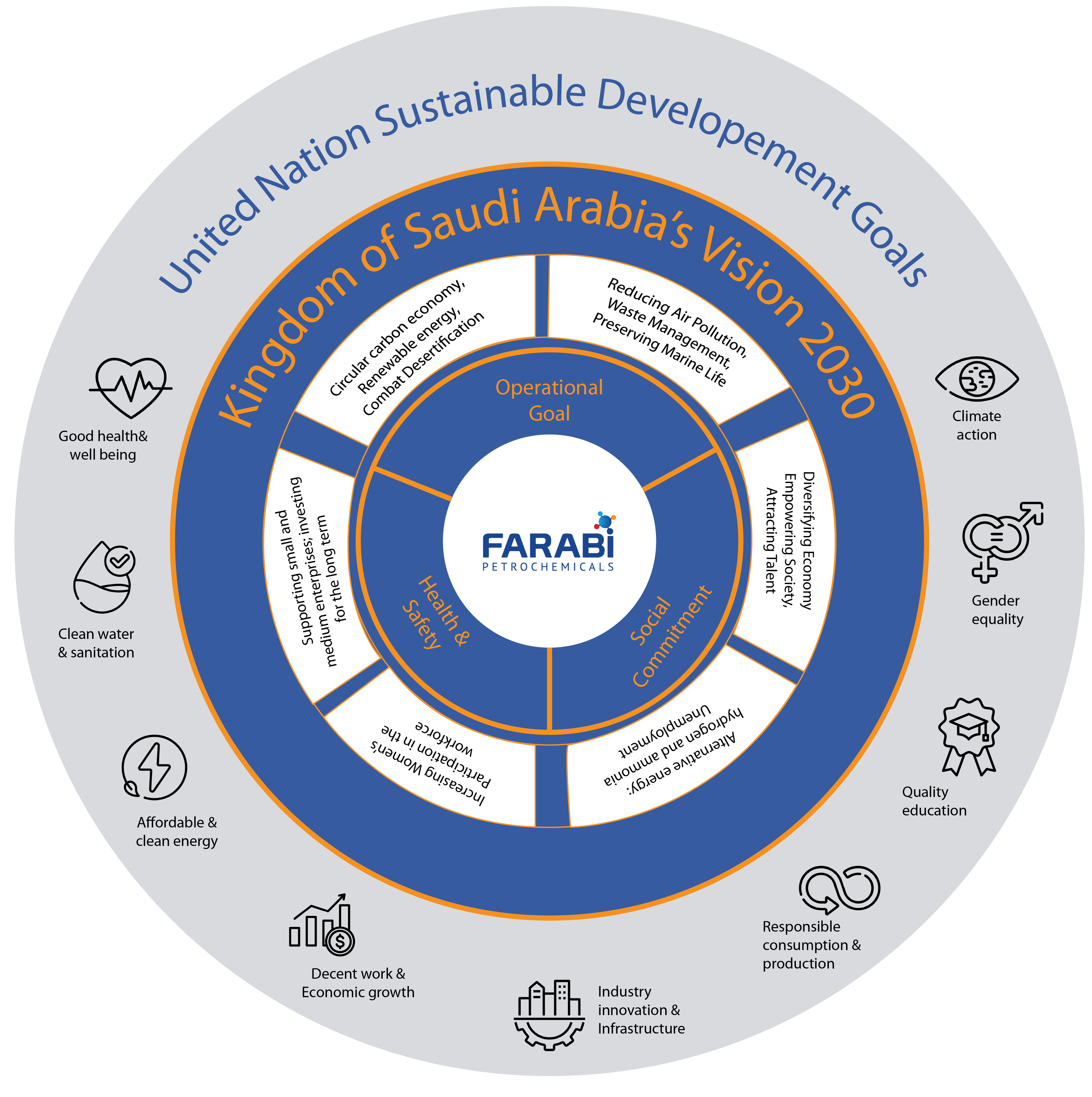
Central to our sustainability framework is a fusion of our organizational strengths and a purpose-driven methodology that propels us towards transformative change. This blueprint seamlessly aligns with the Saudi Green Initiative and Vision 2030, reflecting our harmonious resonance with the Kingdom's progressive objectives. As we harness our capabilities and embrace this unique approach, we are primed to forge a distinct and substantial contribution, echoing the very ethos encapsulated by the Saudi Green Initiative and Vision 2030.
Materiality involves the identification of important issues that pertain to an organization. This approach aims to pinpoint key economic, environmental, and social concerns that can either notably affect the company's operational success or substantially sway the opinions and choices of its stakeholders. According to the GRI (Global Reporting Initiative), materiality is defined as follows:
“The information in a report should cover topics/aspects and indicators that reflect the organization’s significant economic, environmental and social impacts, or that would substantively influence the assessments and decisions of stakeholders”
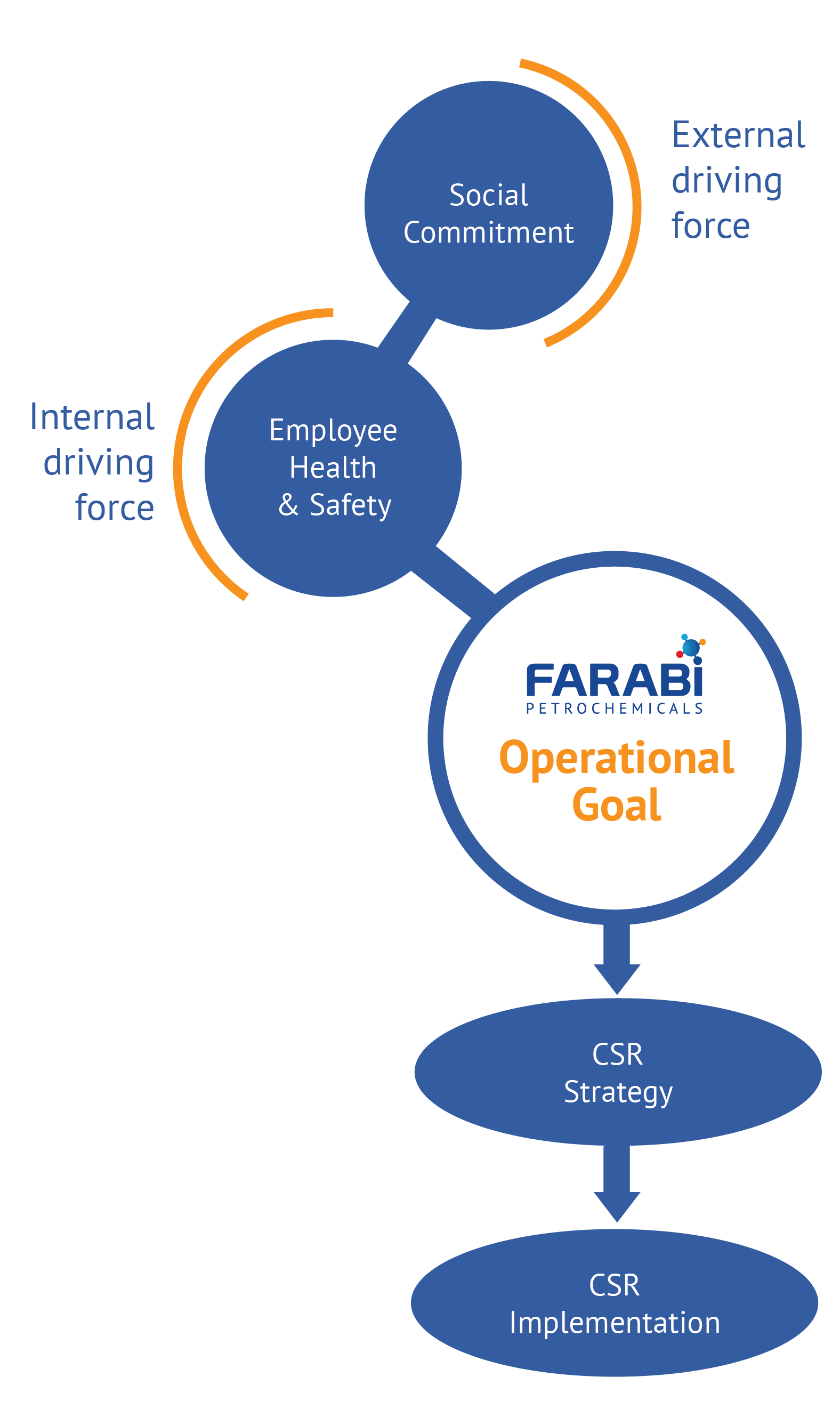
We have established targeted strategies and objectives to drive ongoing enhancements across our key focus areas. Within our operational goal strategy, we have dedicated attention to all three scopes, encompassing aspects such as fuel gas consumption, company-owned vehicles, purchased electricity, waste disposal, air travel, and logistical operations.
In line with our Social Commitment, we are dedicated to enhancing societal well-being through our social responsibility initiatives led by the SHE Awareness Committee (SHEAC). This encompasses a range of activities, including social campaigns and outreach programs for individuals, particularly children. Moreover, we are resolute in our efforts to curtail fugitive emissions and champion a greener environment by actively participating in tree-planting initiatives.
Farabi also places a strong emphasis on the well-being of our employees. We have instituted operational controls such as monitoring benzene exposure, implementing Leak Detection and Repair Programs (LDAR), conducting radiation assessments, and performing noise surveys as preemptive measures. Additionally, we have instituted a comprehensive employee health check-up program to ensure that we fulfill our commitments to their well-being.
At the core of Farabi's principles lies effective governance, which serves to uphold our commitments to all stakeholders. Our sustainability governance framework establishes expectations, assigns responsibilities, evaluates performance, and guarantees the execution of planned sustainability strategies and objectives. It delineates roles and duties, shaping sustainability-focused strategies and endeavors that the organization has embraced to ensure excellence in sustainability across all operations.
Through this governance structure, we formalize the authority for sustainability-related decision-making and ensure accountability. The efficacy of this governance framework lies in its ability to proficiently manage sustainability performance, closely monitor progress, and provide appropriate reporting mechanisms.
Farabi has successfully created and implemented a well-organized process-driven system within the framework of Farabi Integrated Management Systems (FIMS). Within this system, specific processes (outlined below) have been meticulously developed, deployed, and efficiently executed company-wide.
Farabi has embraced the Saudi Standard framework for reporting and formulated strategies aligned with the GRI standard guidelines. Leading the way are the members of the Farabi Sustainability Steering Committee, who are spearheading various initiatives to drive sustainability throughout the organization. This commitment to sustainability has gained significant traction, as evidenced by the establishment of a target to reduce CO2-equivalent emission intensity by 20% over a decade.
At FPC, we are fully dedicated to sustainability, encompassing social, economic, and environmental responsibilities. Our pursuit of excellence in business goes hand in hand with our unwavering commitment to benefit all stakeholders. We uphold a policy of transparent disclosure that centers on sustainable development, showcasing our genuine concern for the well-being of future generations.
Our approach involves active engagement with global challenges. In line with this philosophy, FPC has entered into partnerships with esteemed international sustainability organizations such as the Carbon Disclosure Projects (CDP), the American Cleaning Institute (ACI), and the Gulf Petrochemicals & Chemical Associations (GPCA). We are actively participating in their initiatives and reporting programs, as part of our dedication to making a positive impact on a global scale.